
Zoning 101: The Rules Behind What Gets Built Where
May 19, 2026
By Fletcher K. Law
Zoning is the legal means by which a local government dictates permitted land uses of property within its jurisdiction. Rezoning, therefore, is the legislative process to change the land use classification of a property. While there are numerous types of zoning schema, the most prevalent form of zoning in the United States is commonly referred to as ‘Euclidian Zoning,’ which regulates land uses by type and derives its name from the century-old United States Supreme Court case Euclid v. Amber Realty Co., 272 U.S. 365 (1926) (explaining, in part, that the power to zone property falls under the police power to promote public welfare). Under a Euclidian Zoning scheme, land is commonly restricted to a type and corresponding intensity of use. Your local zoning designations likely include some traits of Euclidian Zoning, utilizing land use designations such as residential, commercial, industrial, agricultural, and the like.
Pertinent to this article is zoning in the State of Georgia. The power of Georgia’s cities and counties to lawfully zone property is founded in Article 9, Section 2, Paragraph IV of the Constitution of the State of Georgia of 1983. (“The governing authority of each county and of each municipality may adopts plans and may exercise the power of zoning.”) The constitutional power to zone property is then subject to general laws established by each state’s legislature. One of the most substantial general laws impacting a governing jurisdiction’s ability to zone property is the ‘Zoning Procedures Law’ found in O.C.G.A. § 36-66-1 et seq. Georgia’s Zoning Procedures Law sets forth mandatory procedures applicable to zoning actions.
Zoning is important because the type of use authorized on any given property can substantially alter the fair market value of the property. For example, a ten-acre tract zoned as a single-family residential property has a vastly different ability to generate a return on investment than the same property with multi-family zoning that authorizes the construction of two hundred apartment units. Naturally, the next question follows, how do I rezone property and when am I legally entitled to do so?
Whether a local government will authorize a property’s rezoning is dependent on several considerations, chief among which is whether the proposed zoning change fits within the jurisdictions’ land use plan (and generally also some political considerations). A local government’s land use plan is adopted in the form of a ‘Comprehensive Plan.’ A Comprehensive Plan is a document that serves as the guide for, among other things, how the local governing body believes land within that jurisdiction should develop. A Comprehensive Plan generally sub divides a jurisdiction into districts or character areas based upon the development patterns as drafted in the Comprehensive Plan. Accordingly, the Comprehensive Plan also serves as a guide for a property owner or investor in determining whether a rezoning or particular use may be feasible under the circumstances.
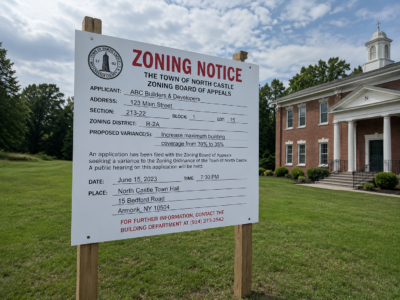
In matters concerning property already zoned for a particular use, the rezoning process as a general rule may be initiated by either a property owner, its authorized representative, or the local government. It is not uncommon for a rezoning applicant to be a prospective purchaser of real estate who is under contract to purchase such property contingent on a successful rezoning. An interested party initiates a rezoning through submission of a rezoning application, which usually includes a written section, survey and/or engineered plans, along with payment of a fee. Thereafter, in accordance with Georgia’s Zoning Procedures Law, a notice of public hearing for the rezoning is published in the legal organ for the jurisdiction along with placement of signage on the property in a publicly visible area. At the public hearing, the applicant and any opponents are granted the opportunity to comment on the rezoning project and appear before a planning commission or similar land use commission. This committee then makes a recommendation to the jurisdiction’s elected officials. For a municipality, the final decision making officials are usually the city council. Alternatively, for a county, the final decision is typically rendered by the board of county commissioner(s).
In the event the local government’s elected officials deny the application, the aggrieved applicant has thirty days to appeal to superior court. Importantly, the most common challenges to a rezoning denial are constitutional attacks which must be raised before the local government prior to a final decision on the application. See e.g., Trend Dev. Corp. v. Douglas Cnty., 259 Ga. 425, 427 (1989); Fairfax Mk v. City of Clarkston, 274 Ga. 520, 522 (2001). The most common challenges raised in response to a rezoning denial allege an unconstitutional taking of property and/or a violation of due process.
Along those lines, a local government is not vested with unfettered discretion to deny rezoning applications in a subjective manner at the whim of its elected politicians. Rather, there exists some inherent tension between a local government’s exercise of its zoning power and an “individual’s right to the unfettered use of his property.” Barrett v. Hamby, 235 Ga. 262, 265 (1975). By way of example, an applicant can show an entitlement to a rezoning in light of the factors elaborated in Guhl v. Holcomb Bridge Road Corp., 238 Ga. 322 (1977). The Guhl factors turn on whether the existing zoning is lawful in light of the following: i) existing uses and zoning of nearby property; ii) the extent to which property values are diminished by the particular zoning restrictions; iii) the extent to which the destruction of property values of the applicant promotes the health, safety, morals, or general welfare of the public; iv) the relative gain to the public, as compared to the hardship imposed upon the property owner; v) the suitability of the subjec property for the zoned purposes; and vi) the length of time the property has been vacant as zoned in light of the area. Id. The focus of the Guhl factors largely turn on whether the refusal to rezone property is arbitrary, unreasonable, and lacks a rational relationship to public health, safety, morals, or general welfare.
While this article is only a brief introduction into rezoning, it should suffice to demonstrate that navigating a rezoning is a complex task necessitating experienced guidance. All too often, aggrieved applicants seek legal assistance only after their land use application has been denied by the local jurisdiction which can vastly complicate, or even forfeit, an appeal of the local government’s denial.
Fletcher K. Law is an attorney with Flint, Connolly & Walker LLP who assists individuals and businesses in numerous corporate and real estate matters. Mr. Law’s practice focuses on land and property including land use and zoning, development consulting, eminent domain, and related areas.